Bal du Rat Mort – Grease

YOU’RE THE ONE THAT I WANTThe 120th edition of Bal du Rat Mort features the theme ‘Grease, an Evening of 50s & 60s Fun’. Jump into your Cadillac and come party on Saturday 3 March at the country’s most spectacular themed ball! Have a ball with the right outfit!

Gentlemen, dig out your sparkly suits or be a rebel in a leather jacket and a shiny pompadour. Sideburns are a plus. Make sure to remember to bring a comb to put your hairstyle back in order after all the wild dancing. Ladies, the war has been over for a while now, so show off your curves! Colourful dresses with high heels, a tight top and bright red lipstick. Put an Alice band in your hair or some nice big curls. Would you like a little help? Both men and women are welcome at the Beauty Boudoir for a themed hairstyle and make-up. Moreover, it’s completely free of charge. Or… let yourselves be inspired by Elvis Presley or Marilyn Monroe, two style icons from the fifties!Dare to twist, jive, swing or Boogie Woogie with the best Rock ‘n Roll dance music, provided by living jukebox DJ Chris Barrow. Enjoy live acts and shows all night, a photo booth, a costume competition and a real American Diner for delicious hamburgers and milkshakes!Immerse yourselves in days gone by and reserve your tickets now for the Bal du Rat Mort!

ALL DATES

Saturday, 3 March, 2018 – 20:00

LOCATION

Kursaal Oostende

Kursaal-Westhelling 12

Oostende 8400

Show location on map


Vier carnaval in Oostende

Tijdens het weekend van 2, 3 en 4 maart kan iedereen meevieren tijdens Carnaval in Oostende!

VRIJDAG 2 MAART
Naar jaarlijkse traditie is er vrijdagavond om 19.00 uur de aanstelling van de Prins en Prinses Carnaval in het Stadhuis. Daarna volgt om 20.00 uur een authentieke cimateirestoet met lampionnen richting Groentemarkt. Daar zal Tjannie Carbon verbrand worden. Nadien kan er rond 22.00 uur gefeest worden in de carnavalstent op de Groentemarkt.

ZATERDAG 3 MAART
Zaterdag is de dag van het Kindercarnaval met een kinderstoet, de verbranding van mini-Tjannie Carbon en een mini-kloeffeworp, georganiseerd samen met de Orde van de Kloeffe. De centrale locatie is de Groentemarkt. In het Kursaal Oostende kan je je vanaf 20.00 uur tijdens Bal Rat Mort helemaal onderdompelen in Grease-sfeer.

ZONDAG 4 MAART

De Grote Carnavalstoet trekt op zondag vanaf 15.00 uur door de stad en eindigt op het Wapenplein, waar iedereen verzamelt voor de Kloeffeworp. Aansluitend wordt het slot van het Carnavalweekend ingezet in de carnavalstent op de Groentemarkt met verschillende optredens.


Les vols de Wizz Air sont dorénavant également payables avec Bancontact

Wizz Air, la plus grande compagnie aérienne low-cost d’Europe centrale et de l’est, annonce que les passagers, disposant d’une carte Bancontact et souhaitant réserver un vol via le site Internet de WIZZ, auront la possibilité de payer leur ticket ainsi que les services connexes par ce moyen de paiement en ligne.

« En Belgique Bancontact est le moyen de paiement électronique le plus en vogue. Il permet aux consommateurs d’effectuer le paiement de leurs achats en ligne d’une façon rapide et sûre dans l’environnement Internet habituel de leur propre banque », dit Harry Drok, Chef de l’E-Commerce de Wizz Air. « La mise en œuvre du Bancontact comme méthode de paiement répond à la question fréquemment posée par nos clients, résidant ou travaillant en Belgique. Bancontact est automatiquement offert comme méthode de paiement à tout passager payant en euros, ayant choisi le néerlandais ou le français comme langue préférée ou ayant une adresse en Belgique. »

Depuis 1989 Bancontact, assurant les transactions financières aisées, est le leader du marché belge pour les paiements électroniques. Le client sait effectuer avec le code pin de sa carte Bancontact des paiements en magasins, stations-service et boutiques en ligne. Il est également possible d’effectuer un paiement mobile avec Bancontact ou de retirer de l’argent d’un distributeur automatique.

WIZZ offre actuellement des vols vers 9 destinations depuis Brussels South Charleroi Airport, à savoir : Bucarest, Budapest, Cluj-Napoca, Ljubljana, Sibiu, Skopje, Sofia, Timisoara et Varsovie.


A PROPOS DE WIZZ AIR
Wizz Air, la plus grande compagnie aérienne à bas prix d’Europe centrale et orientale, offre plus que 550 routes depuis 28 bases aériennes. Elle relie 145 destinations dans 44 pays. La flotte compte 88 Airbus du type A320 et A321. Wizz Air embauche plus de 3500 professionnels offrant un service supérieur. En 2017, Wizz Air a transporté 28,2 millions de passagers.

Wizz Air est une société cotée à la Bourse de Londres sous le symbole WIZZ et fait partie des index FTSE 250 et FTSE All-Share. Wizz Air a remporté avec succès le IATA’s (International Air Transport Association) Operational Safety Audit (IOSA), un standard international en matière de sécurité aérienne. Wizz Air a été nommée «European airline of 2017» par Aviation 100, une publication phare qui récompense chaque année les meilleurs acteurs de l’industrie aéronautique.

www.wizzair.com


airBaltic to Recruit Over 100 Pilots in 2018

Riga. The Latvian airline airBaltic in February will host an airBaltic “Pilot Open Days” initiative in several cities, including Vilnius, Helsinki, Amsterdam and Stockholm. The initiative targets different types of pilots willing to become part of airBaltic flight crew. The airline is planning to recruit more than 100 pilots in 2018.

Pauls Calitis, Senior Vice President Flight Operations of airBaltic: “An excellent team is essential to our successful operation and airBaltic’s growth over the past years has confirmed that. Our route map is expanding, the fleet is growing and more passengers travel with us. Such development requires our team to be highly motivated. And naturally, due to the production increase, airBaltic will recruit more pilots this year. Working at airBaltic has many advantages for all positions, but considering our growth and the changing pilot industry, we are now further improving our pilot remuneration system.”

During the “Pilot Open Days” events, all interested individuals will have a chance to learn more about airBaltic’s flight crew vacancies and to receive more information about airBaltic. During the event, the participants will have opportunity to ask questions directly to airBaltic chief pilots and receive all the necessary information on how to join the dynamic and motivated team of the world’s most punctual airline airBaltic.

airBaltic is organizing “Pilot Open Days” in specific cities due to the strong community of pilots. airBaltic has a multicultural team with over 50 pilots from Lithuania, more than 26 pilots from Netherlands and over 14 from Sweden.

  • On February 1, 2018 the first “Pilot Open Days” events will be held in Vilnius at 10:00 and at 15:00 in “AirInn Vilnius Hotel”.

  • On February 6, 2018 airBaltic team will travel to Stockholm and the events will take place at 10:00 and at 15:00 in “Radisson Blu Skycity Hotel”.

  • On February 8, 2018 the “Pilot Open Days” events will be held in Helsinki in “Cumulus Resort Airport Congress Center” at 10:00 and at 15:00.

  • On February 13, 2018 the final event will take place in Amsterdam in “Hotel NH Amsterdam Schiphol Airport” at 11:00.

The project does not require candidates to fill out an application form before the visit, but simply to take their CV, personal identification document, and arrive for the event. For more information about work at airBaltic, candidates can visit airline’s recruitment website: http://recruite.airbaltic.com/

In December 2017, airBaltic also started the application process for candidates to the airline’s newly established Pilot Academy at airBalticTraining. Persons selected will be the first class of students of the professional airline pilot training programme and will become airBaltic pilots upon completion of the programme in about two years from now.

airBaltic serves over 60 destinations from its home base in Riga, Latvia. From every one of these locations, airBaltic offers convenient connections via Riga to its network spanning Europe, Scandinavia, CIS and the Middle East. In addition, airBaltic also offers direct flights from Tallinn and Vilnius.

airBaltic in brief:

airBaltic (AIR BALTIC CORPORATION) is the world’s most punctual airlines connecting the Baltic region with 60 destinations in Europe, the Middle East, and the CIS. airBaltic is a joint stock company that was established in 1995. Its primary shareholder is the Latvian state, which holds 80.05% of the stock, while Lars Thuesen holds around 20% through his fully-owned Aircraft Leasing 1 SIA. The airBaltic fleet consists of 30 aircraft – 7 Bombardier CS300, 11 Boeing 737 and 12 Bombardier Q400Next Gen. airBaltic has received numerous international awards for excellence, innovative services, and achievements in reshaping its business. In 2012, airBaltic was ranked by Airlinetrends among the Top 10 airlines globally for innovations. airBaltic achieved the best on-time performance globally for three years running in 2014, 2015 and 2017.


Ksiaz Castle, the Pearl of Lower Silesia

Ksiaz Castle, also called the Pearl of Lower Silesia is one of the greatest visitor attractions in the region. Erected in the 13th century, Ksiaz castle was home to many noble families such as the mighty House of Hochberg. Between 1509 and 1941, the Hochberg’s expanded the castle and significantly contributed to its splendor. During the World War II the castle was taken over by the occupying German forces. Under their reign numerous historic chambers were destroyed. The Nazis created a system of tunnels underneath the castle, which the function still remains a mystery. Recently the Ksiaz castle made news as a rumor of a lost Nazi gold train was believed to be buried in the vicinity of the castle.

After systematic looting committed by the German occupiers and later by the Red Army, in 1952 the renovation work was undertaken to restore the Ksiaz Castle to its previous grandeur.

Today, visitors can admire the majesty of numerous chambers, terraces and surrounding gardens. The underground tunnel is also available to the public. Those visitors wishing to spend a night, Ksiaz Hotel is conveniently located nearby the castle.


Helpful links:

Ksiaz Castle: http://www.ksiaz.walbrzych.pl/en/turystyka

Ksiaz Hotel: http://www.ksiaz.walbrzych.pl/en/turystyka/hotel


“Piégée” et “ensanglantée”, la célèbre Instagrameuse Cassandra Forêt dénonce la cruauté de Canada Goose

La jeune star des réseaux sociaux se joint à PETA pour appeler la marque à cesser d’utiliser la fourrure de coyotes cruellement piégés et tués

Paris – Lors d’une mise en scène publique à Paris aujourd’hui, Cassandra Forêt – chanteuse, star des réseaux sociaux et petite sœur de Jade Lagardère – a posé jambes nues dans une fausse veste Canada Goose, prise dans un piège à mâchoire métallique, la jambe « ensanglantée ». Elle était étendue sur un panneau circulaire estampillé « Cruauté Canada Goose » et entourée de militants tenant des pancartes et distribuant des tracts pour informer les gens sur la manière dont les coyotes sont piégés dans la nature et violemment tués pour leurs peaux.

« La fourrure de ces coyotes leur appartient, et n’a rien à faire sur un manteau », déclare Cassandra Forêt. « Il n’y a rien de glamour à porter la peau d’animaux morts. Après avoir appris à quel point ils souffrent, j’ai voulu m’engager, et j’invite les gens à me rejoindre pour dire non à l’immense souffrance engendrée par Canada Goose. »

PETA – dont la devise dit notamment que « les animaux ne nous appartiennent pas et [que] nous n’avons pas à les utiliser comme vêtements » – rappelle que la fourrure utilisée pour les garnitures des vestes Canada Goose provient de coyotes sauvages piégés dans la nature, qui agonisent souvent des jours durant, d’hémorragies, de déshydratation, de faim, de gelure, de gangrène et d’attaques de prédateurs. On sait que parfois, des mères désespérées de s’enfuir pour aller retrouver leurs bébés affamés vont jusqu’à se ronger leurs propres membres. Les animaux qui sont encore en vie au retour du trappeur sont abattus au fusil, étranglés, écrasés au sol ou battus à mort.

Pour plus d’informations, rendez-vous sur PETAFrance.com.


Le cœur de la ville de Blankenberge bat et ne laisse personne indifférent


La nouvelle identité et le nouveau style de Blankenberge affirment la position de PlaceToB de la ville à la côte belge

Mardi 16 janvier 2018 — Aujourd’hui, la ville de Blankenberge dévoile sa nouvelle identité aux habitants et à la presse. Le Bourgmestre Ivan De Clerck, en présence de la présentatrice Erika Van Tielen, a hissé les tout nouveaux drapeaux sur le toit de l’hôtel de ville et a déroulé une grande banderole avec le nouveau logo de Blankenberge. Pour la première fois, la ville côtière voit les choses en grand avec une toute nouvelle identité dont le cœur et les rayures noires et blanches sont centrales. Ces dernières années, les investissements ont porté sur le patrimoine public de la ville et de nombreux projets ambitieux verront le jour prochainement.

« Nous sommes fiers de présenter le nouveau Blankenberge aujourd’hui. Cette nouvelle identité doit mettre la marque Blankenberge sur la carte. Dans le passé, nous nous sommes trop peu concentrés sur les nombreux atouts que notre ville a à offrir. Blankenberge est authentique, mais en même temps constamment en mouvement. C’est précisément pour cela qu’il est temps de changer, pour une nouvelle identité qui montre immédiatement qui nous sommes vraiment », explique le Bourgmestre Ivan De Clerck.

Depuis de nombreuses années, un vent nouveau souffle sur Blankenberge. Les rues du centre ont été réaménagées et la gare entièrement rénovée. La bibliothèque a déménagé dans un bâtiment entièrement rénové et le complexe sportif de Sportdoze et le Skateplaza ont ouvert leurs portes. Le Point Info Tourisme a élu domicile dans la Hoogstraat afin d’encore mieux informer les visiteurs de la ville. En 2018, débutera la construction d’une nouvelle piscine remplie à l’eau de mer et d’ici l’été les travaux de la nouvelle place dédiée aux événements (Leopold III-plein) seront finis.

L’ambiance unique de Blankenberge avec son patrimoine exceptionnel et ces atouts culturels divers, tels que la Belle Epoque séduit un public large et fidèle. Le mélange de nature, mer et plage, l’offre culinaire et shopping varié, un calendrier riche en événements et une large gamme d’attractions pour toutes les météos, font de la ville une attraction touristique dynamique.

« Notre mission est de faire de Blankenberge une ville ouverte et chérie où il y a beaucoup à découvrir. Nous voulons toujours être ouverts, accessibles et disponibles pour tous. Pour les habitants, les propriétaires de seconde résidence, les touristes et les entrepreneurs. La nouvelle identité doit renforcer les ambitions de Blankenberge », commente le Bourgmestre.

Blankenberge adopte un nouveau logo


Afin de distinguer Blankenberge des autres villes côtières belges, des recherches ont été faites pour trouver les caractéristiques uniques qui donnent une certaine individualité à la ville. « Les rayures noires et blanches sont les couleurs de Blankenberge. Elles reviennent à la fois dans les armoiries et les emblématiques cabines de bain roulantes de Blankenberge. Un clin d’œil au passé à la fois contemporain et intemporel, mode et branché avec un lien vers le maritime. A côté de cela, Blankenberge veut être une ville aimée. Les armoiries ont été transformées en cette icône reconnaissable – le battement de cœur de Blankenberge », explique l’Echevin Philip Konings, responsable de la communication.

En 2018, la nouvelle approche et la nouvelle identité seront entièrement déployées, avec respect pour ce qui était et ce qui arrive. Les rayures noires et blanches et le nouveau logo seront de plus en plus visibles en rue sur les affiches, les flyers, les drapeaux et les panneaux publicitaires. Le magazine de la ville Info Blankenberge a été repensé et s’appelle désormais HALLO Blankenberge. De plus, les brochures touristiques 2018 font peau neuve et quelques accessoires tels sacs, essuies de plage, bics, cartes postales et magnets ont été développés. Ils sont dès à présent en vente au Point Info Tourisme.

Blankenberge se concentre sur les réseaux sociaux et en ligne

Le nouveau site de la ville de Blankenberge a été divisé en deux entités. Sur le site de la ville www.blankenberge.be, lancé début mars, les habitants et propriétaires de seconde résidence pourront trouver par thème toutes les informations à propos des différents services de la ville. La facilité d’utilisation restera centrale afin que les citoyens puissent rapidement accéder à l’information qu’ils cherchent.

Via le site touristique www.visit-blankenberge.be lancé aujourd’hui, les visiteurs trouveront toutes les informations sur l’offre variée d’activités de la ville. Un aperçu pratique des événements, des établissements horeca et des possibilités d’hébergement, animé par des images promotionnelles, devrait donner envie aux visiteurs de réserver et préparer leur visite à Blankenberge. Le site évoluera en fonction des saisons, des thèmes spécifiques et des festivités à l’agenda afin que les visiteurs soient informés pro activement de l’offre actuelle à Blankenberge.

La ville de Blankenberge ne peut plus être ignorée sur les réseaux sociaux. « Toerisme Blankenberge » est actif depuis quelques mois sur Instagram. Depuis 2016, la page Toerisme Blankenberge existe sur Facebook, proposant des photos et infos sur les différents événements de la ville. Dès aujourd’hui une page de la ville voit le jour. La page Facebook de la ville de Blankenberge offrira un large éventail d’informations : touristiques, évènementielles, mais aussi des informations sur les différents services de la ville, ainsi que des messages d’utilité publique et d’autres faits amusants.

« De plus en plus de personnes sont actives sur les réseaux sociaux. C’est un canal idéal pour promouvoir Blankenberge et en tant que ville nous ne pouvons pas en être absents. Nous voulons mettre en avant les atouts de Blankenberge par le biais de partage de photos de visiteurs et habitants sur nos profils. Nous invitons tout le monde à utiliser les hashtags #Blankenberge, #visitblankenberge et #PlaceToB lors de partages à propos de la ville sur les réseaux sociaux », conclut l’Echevin en charge de l’ICT, Björn Prasse.


How fearless Russian explorers beat the Brits to discover Antarctica

While Amerigo Vespucci and James Cook only presumed that the Antarctic continent exists, Russian sailors were the ones who discovered it almost 200 years ago this month.

“I’m sure there is land there, and we even saw a part of it,” wrote British Captain James Cook after sailing to the Southern Ocean during his trip around the world. He understood that it would be hard to reach the Antarctic continent because of the harsh conditions. Well, Russians also knew that, but they went for it anyway.

Rivals on the seas

The Russian and British empires had long been rivals on the seas. So, when the famous British naval commander and explorer, James Cook, reported his supposed finding of a southernmost land, it became clear that its lawful discovery would only be a matter of time. Meanwhile, British seal hunters often sailed the Southern Ocean.

The Russians understood that the British were likely to discover the new lands. But since they had sailed among heavy ice since medieval times, the Russians had a certain advantage, and they knew ways to make vessels ice-prone and how to sail in extreme conditions.

In the early 19th century, at the time of the Napoleonic wars, the rivalry between the Russian and British fleets was intense. Who would be the first to discover the southernmost continent? After the First Russian Circumnavigation (1803-1806) lead by Ivan Kruzenshtern, the Russians were convinced that they could accomplish it.

Preparation

On July 16, 1819, two Russian warships – Mirny, and Vostok – set sail from Kronshtadt, arriving in Rio de Janeiro by mid November. The 41-year-old second captain, Faddey Bellinsgauzen, who took part in the First Circumnavigation under Kruzenshtern, was appointed head of the new expedition, which became Russia’s first to the furthest part of the Southern Ocean.

The sailors were well prepared, stocked with fermented cabbage and lemons that are good sources of vitamin C to help avoid scurvy. To conserve the sources of vitamins, the sailors took advantage of every port of call on their way south, exchanging money and goods for fresh fruit. To stay warm, the sailors had a sizable stock of rum.

The crew took all precautions to maintain good hygiene – every day airing their clothes, frequently cleaning cabins and beds, and even having a Russian banya on board. In the end, only one sailor died during the voyage; the poor man succumbing to what was described as a “nervous fever” after crossing the Antarctic Circle.

Vostok was manned by a crew of 117 under Capt. Bellinsgauzen’s command; while 73 sailors served aboard Mirny, which was headed by 31-year-old Lt. Mikhail Lazarev. These two ships, however, were different. Mirny was built by Russian naval engineers and had special features to protect its from the pressure of the ice. Vostok was built according to British designs and was plagued by problems; she had to be mended and repaired frequently during the expedition, and her weakness later played a role in the discovery of Antarctica.

Apart from the sailors, on board were a doctor, a painter, an astronomy professor and an Orthodox priest – the explorers needed religious services, and hoped to find natives on the land they were searching for, hoping to convert them to Christianity. The crew also had guns and cannons in case the natives were unfriendly. In the end, there was no one to convert or fight, which didn’t make the expedition easier.

Discovery

From Rio the ships sailed directly to Antarctic waters, where the crew saw new lands – for example, Sandwich Land, which had been discovered and named by James Cook; in fact turning out to be the Sandwich Islands. The Russians also discovered various islands, naming them after members of the expedition.

On January 28, 1820, the two ships closed in on the Antarctic shore. Lt. Lazarev reported “a mighty ice cover of great height stretching as far as the eye could see.” This was the Antarctic ice shield that covered the newly discovered continent. At the same time, the Antarctic winter had fully set in, and in order to rest and recover the Russian ships sailed to Port Jackson, (Sydney), Australia.

“Our ships were constantly among ice. People were suffering great hardships from the harshness of the winds that dominate these seas, and even more from the thick darkness, and wet and heavy snows that are often and abundant here. Frost accompanied us throughout our sailing. The ice mountains, some more than 400 feet above the sea [Russian feet, about 120 meters], and some wider than 15 miles in diameter, were our constant adversaries. We had to protect ourselves with the greatest precautions and the strictest vigilance. The tiniest mistake could have brought our ventures to ruin.” This is how Capt. Bellinsgauzen described the voyage in his report sent from Port Jackson to the Naval Ministry in St. Petersburg.

Almost a year later, in December 1820, the Russian ships again crossed the Antarctic Circle, returning to describe more lands. After a month, however, the condition of Vostok worsened to the point that it was too dangerous to sail on. In January 1821, the ships headed back, and on August 5, 1821, they returned to Kronstadt where Emperor Alexander I greeted them – a great honor for the crew, who were decorated with medals, titles and handsome new appointments. The whole voyage took 751 days.

The next time Russians landed on an Antarctic shore came 136 years later, in 1956, during the Soviet Antarctic Expedition, which founded and built the first Russian scientific research station in Antarctica. Named Mirny, the station honors one of the famous Russian vessels that discovered the sixth continent.

For further reading on Russian discoveries, check out our project on how Russians explored Alaska, or look at the greatest explorers in Russian history. For something more up to date, discuss why people in Russia hate Muscovites.

RUSSIA BEYOND : How fearless Russian explorers beat the Brits to discover Antarctica


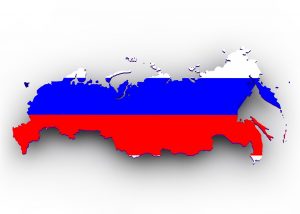
Number of US Tourists Visiting Russia Grows 25% in 2017 – Russian Trade Envoy

WASHINGTON (Sputnik) – The number of American tourists visiting Russia has grown significantly this year, while Russian exports have also performed well, the Russian Trade Representative in the United States, Aleksander Stadnik, told Sputnik.

“Today, American tourists visiting our country rank third after Chinese and German tourists. Since the beginning of the year, the total flow of tourists from the United States to Russia has grown by a quarter,” Stadnik said on Thursday.

Stadnik noted that between 270,000 and 280,000 US tourists visited Russia in 2017.

“That is nearly double the number of tourists from the United States in 2013, after their number decreased in 2014 and 2015,” Stadnik noted.

Russia-US relations have deteriorated since 2014 after the outbreak of the crisis in Ukraine and Crimea’s reunification with Russia. The United States and some of its allies have imposed several rounds of sanctions against Russia.

READ MORE: Russia Notifies US of Rejection of Several Agreements Within Open Skies Treaty

In addition, the United States has accused Russia of meddling in its 2016 presidential election. Russia has repeatedly refuted allegations of meddling and called the claims groundless.

US-Russia trade turnover

The US-Russia trade turnover has increased by 15-17 percent this year and hopefully the growth will reach 20 percent in 2018, Aleksander Stadnik told Sputnik.

“We expect the year-end results to show that trade turnover has risen by 15-17 percent. We will aim for at least 20 percent next year,” Stadnik said Thursday.

This year’s results indicate an increase of about 2.7 billion dollars in trade turnover as compared to 2016, he added.

Stadnik noted that non-commodity goods account for about 97.5 percent of Russian exports to the United States.

“At the same time, there is growth in exports of our non-commodity, non-energy goods by almost 20 percent, high-tech goods by more than 42 percent, innovative goods by 28 percent, and machinery and technical products by almost 22 percent,” he said. “Commodity exports, despite only amounting to 2.5 percent, have also grown by more than 20 percent.”

Stadnik also said that Russia’s imports from the United States are almost 100 percent non-commodity goods, which grew by 16.5 percent this year.

The import of high-tech goods increased by almost 24.5 percent, innovative goods by 21 percent, and machinery and technical products by 20.5 percent, he added.

“Russian and American business circles are actively seeking new opportunities for mutually beneficial cooperation,” Stadnik said, adding that they are looking into developing sustainable trade, unified and transparent mechanisms and standards for commodity flows, transport and logistic infrastructure.

Stadnik said that regardless of the current state of relations between Russia and the United States in terms of trade and economics, the two countries’ business communities continue to actively engage in mutually beneficial cooperation.

READ MORE: Strengthening of Sanctions to Be Overwhelming Risk for Russia-US Ties — Kremlin

The trade envoy noted that Russia supports such cooperation at the highest levels, citing President Vladimir Putin’s meeting with the heads of some 150 US companies at the St. Petersburg International Economic Forum, as well as meetings that the Russian Trade Minister and Economic Development Minister held with US business leaders in New York ta the invitation of the US-Russia Business Council.

“There were no such initiatives taken by the US,” he added.

Western Sanctions

“The whole period of the latest western sanctions demonstrates that Russia has been successfully resolving import substitution issues with respect to essential goods — the best example is agriculture — as well as attracting investors,” Stadnik said.

Stadnik noted that some investment banks have warned of alleged dangers of investing in Russia given the sanctions, but added that there is no stopping Russia’s economic growth.

“But this is mainly Western banks, such as Merrill Lynch,” Stadnik said. “Russia cannot be stopped by sanctions. This is not a slogan, it is an objective reality, confirmed by the growing macroeconomic indicators and the growing authority of our country.”

In the spring of 2014, after Crimea reunified with Russia, the United States and EU restricted the access of the largest Russian banks and companies to Western financing and introduced sectoral sanctions.

SPUTNIK


Nordica will expand its operations at Groningen Airport in spring 2018 with two new routes. In addition to the existing Copenhagen route, Estonian airline will start to fly also between Munich and Brussels

Estonian airline Nordica will add two new routes from Groningen Airport in next spring. As per March 26, 2018 it is possible to fly also Brussels and Munich. Both airports are so called hub-airports allowing good connectivity from Groningen via hubs to all over the world.

With this strong expansion the airport makes a big step towards the realization of their future ambitions. The whole world is within reach with these new destinations from Groningen Airport Eelde. The airport will be the starting point for travelers from the Northern part of The Netherlands for a holiday, a city-break or a business trip. Munich will be connected daily and Brussels six times a week.
Nordica bases a CRJ700 at Groningen Airport Eelde from 25th of March and will be looking at recruiting local cabin crew and pilots. Estonian airline is in a strong expansion phase and expects to show positive financial result in 2017.
As per today tickets to Copenhagen, Munich and Brussels are available, from € 99,- for a return  ticket, via www.flynordica.com or at a (business) travel agency.

Cooperation with Star Alliance Partners
The connections to Copenhagen, Munich and Brussels are operated by Nordica, in cooperation with LOT Polish Airlines. Through connections from these hub-airports are offered by SAS Scandinavian Airlines, Lufthansa and other Star Alliance partners.


Eurostar launches new loyalty programme

  • Club Eurostar will be open to all passengers
  • Members will be rewarded for frequency of travel and spend
  • More ways to spend points including upgrades

Eurostar, the high-speed rail service linking the UK and mainland Europe, announces the launch its new loyalty programme, Club Eurostar. Available to leisure and business travellers, the new programme offers more flexibility, additional benefits, and is accessible to all passengers across the world without any fees or qualifying fares.

Comprised of three membership levels, Club Eurostar is designed to benefit all travellers and reward customers for their frequency of travel and spend, as opposed to their class of service.  Plus, for the first time, members will be able to spend points on upgrades, in addition to free tickets and discounted travel without any blackout dates or fees.

Dorothee Mariotte, Senior Customer Insight and Retention Manager, Eurostar, said:
“We’re delighted to launch our new loyalty programme, which offers both leisure and business travellers a more streamlined offer making it easier for customers to book tickets and access benefits and rewards in a few simple clicks.

Following customer feedback, we’ve made Club Eurostar accessible to all our passengers, irrespective of how much they travel or spend. We can’t wait for our new members to sign up so they can start benefiting from the great range of rewards.”

Easy to use
With brand new self-service options on the new app launching soon, it will be quick and easy for passengers to manage their loyalty points, view the discounts they are entitled to, and access the lounges without the need for a physical card.

When making a booking, customers will earn 1 point for every £1 spent on tickets and members may spend them on Eurostar travel, upgrades, and ticket discounts in 2018. Avantage and Carte Blanche members will also be able to spend points on a selection of curated products including electronics, fashion accessories, watches, fragrances and travel accessories at the online Club Eurostar Shop.

Club tiers and benefits

Classique and all club levels

  • All new members will join Eurostar as a Classique member
  • Spend points on Eurostar tickets and upgrades
  • Access special offers and discounts from Eurostar and partners
  • Share points with family and friends

Avantage

  • Attained when members earn 400 points from Eurostar travel or after 5 return journeys in their membership year.
  • Spend points on travel with Rail Team partners*
  • Spend points on gifts on the new online Club Eurostar Shop

Carte Blanche (in addition to above)

  • Attained when members earn 1,800 points from Eurostar travel or after 24 return journeys in their membership year.
  • Use of fast-track check-in
  • Access to Eurostar Business Premier lounges and use of Business Premier ticket office
  • Access to Rail Team Lounges
  • Pre-bookable taxi service
  • Dedicated support

For more information on Club Eurostar or to book Eurostar tickets visit www.eurostar.com

  • Club Eurostar will be open to all passengers
  • Members will be rewarded for frequency of travel and spend
  • More ways to spend points including upgrades

Eurostar, the high-speed rail service linking the UK and mainland Europe, announces the launch its new loyalty programme, Club Eurostar. Available to leisure and business travellers, the new programme offers more flexibility, additional benefits, and is accessible to all passengers across the world without any fees or qualifying fares.

Comprised of three membership levels, Club Eurostar is designed to benefit all travellers and reward customers for their frequency of travel and spend, as opposed to their class of service.  Plus, for the first time, members will be able to spend points on upgrades, in addition to free tickets and discounted travel without any blackout dates or fees.

Dorothee Mariotte, Senior Customer Insight and Retention Manager, Eurostar, said:
“We’re delighted to launch our new loyalty programme, which offers both leisure and business travellers a more streamlined offer making it easier for customers to book tickets and access benefits and rewards in a few simple clicks.

Following customer feedback, we’ve made Club Eurostar accessible to all our passengers, irrespective of how much they travel or spend. We can’t wait for our new members to sign up so they can start benefiting from the great range of rewards.”

Easy to use
With brand new self-service options on the new app launching soon, it will be quick and easy for passengers to manage their loyalty points, view the discounts they are entitled to, and access the lounges without the need for a physical card.

When making a booking, customers will earn 1 point for every £1 spent on tickets and members may spend them on Eurostar travel, upgrades, and ticket discounts in 2018. Avantage and Carte Blanche members will also be able to spend points on a selection of curated products including electronics, fashion accessories, watches, fragrances and travel accessories at the online Club Eurostar Shop.

Club tiers and benefits

Classique and all club levels

  • All new members will join Eurostar as a Classique member
  • Spend points on Eurostar tickets and upgrades
  • Access special offers and discounts from Eurostar and partners
  • Share points with family and friends

Avantage

  • Attained when members earn 400 points from Eurostar travel or after 5 return journeys in their membership year.
  • Spend points on travel with Rail Team partners*
  • Spend points on gifts on the new online Club Eurostar Shop

Carte Blanche (in addition to above)

  • Attained when members earn 1,800 points from Eurostar travel or after 24 return journeys in their membership year.
  • Use of fast-track check-in
  • Access to Eurostar Business Premier lounges and use of Business Premier ticket office
  • Access to Rail Team Lounges
  • Pre-bookable taxi service
  • Dedicated support

For more information on Club Eurostar or to book Eurostar tickets visit www.eurostar.com